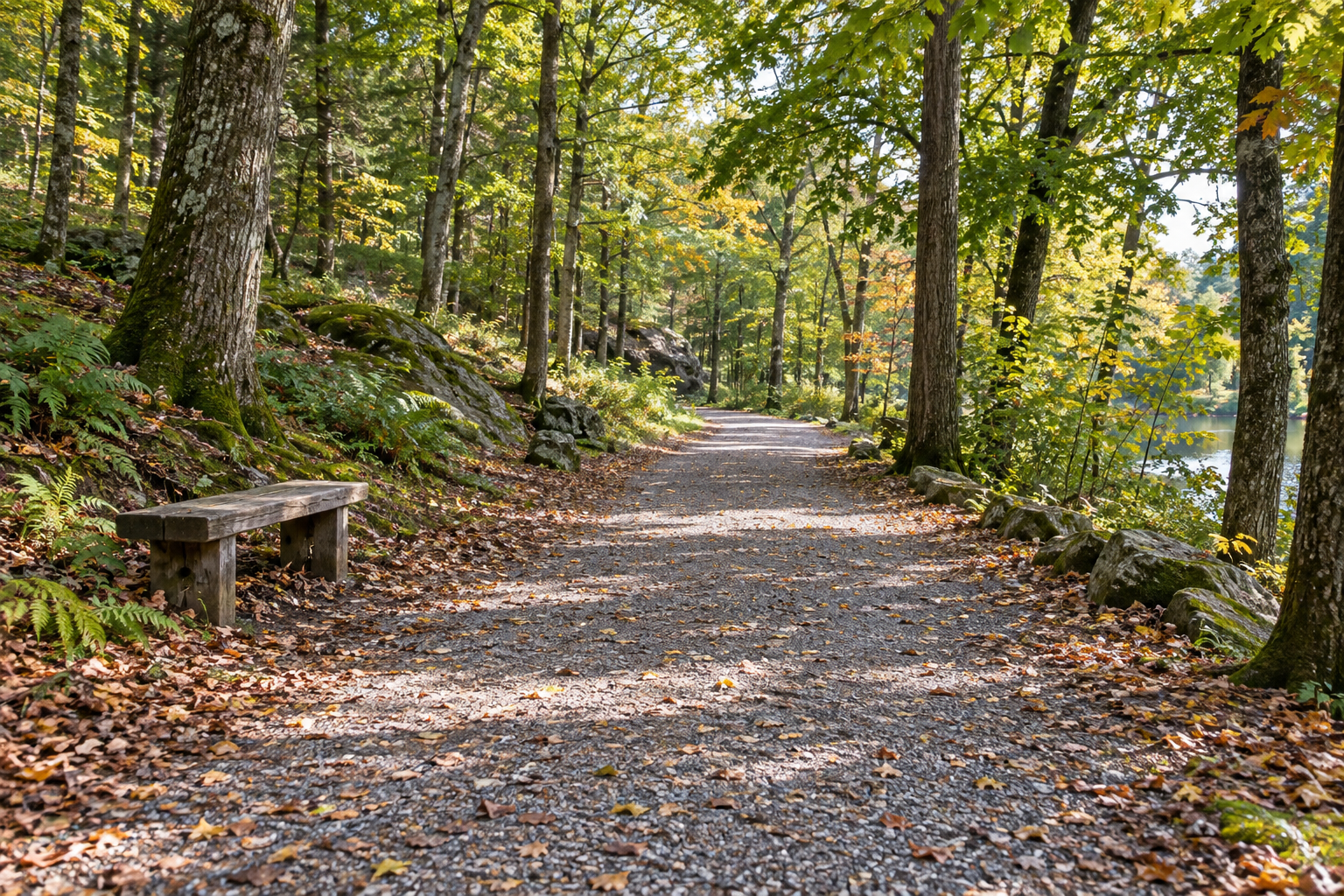
A route description usually leads with the attractive part. Keep reading until you find the practical nouns: gates, steps, roots, mud, crossings, exposure.
Details worth finding
Distance tells you how far the route goes. Elevation change suggests some of the climbing, but neither describes how even the ground is. A short rough path may take more attention than a longer paved one.
Look for the date and source of the description. Compare it with the land manager's current notices, especially after storms or during seasonal closures. Visitor comments can raise useful questions, but an old comment is not confirmation that a route is open today.
When the description is vague
Contact the site office with specific questions. Asking whether there are steps, narrow sections or firm surfaces is more useful than asking whether the walk is easy. If the information still does not answer your needs, choose a better-documented route for this visit. Uncertainty is a planning detail, not something you must overcome by arriving anyway.
Everyday Motion
Ideas to make a little room in your day.